



Communication plays an essential role in a child’s development. From expressing basic needs to building friendships and participating in classroom activities, strong communication skills help children interact with the world. However, some children experience difficulties with speech sounds, language development, or verbal expression.
Access to pediatric speech therapy Denver services can help families better understand these challenges and identify appropriate support. Through individualized assessments, play-based activities, and family involvement, speech therapy helps children develop practical communication skills. Sound Bites Speech and Feeding Therapy provides mobile pediatric speech, language, feeding, and augmentative and alternative communication (AAC) services to families throughout South Denver and surrounding communities.
Table of Contents
- What Is Pediatric Speech Therapy?
- How Does Pediatric Speech Therapy Support Communication Development?
- Why Is Early Speech and Language Intervention Important?
- The Role of Play-Based and Mobile Speech Therapy
- Understanding the Connection Between Speech and Feeding Development
- What Happens During a Pediatric Speech Evaluation?
- Frequently Asked Questions
- At What Age Can a Child Begin Speech Therapy?
- How Long Does Pediatric Speech Therapy Take?
- Can Speech Therapy Help Children Who Are Not Talking Yet?
- Is Home-Based Speech Therapy Effective?
- What Is the Difference Between a Speech Delay and a Language Delay?
- How Can Parents Find Suitable Pediatric Speech Therapy Services?
- Frequently Asked Questions
- Conclusion
What Is Pediatric Speech Therapy?
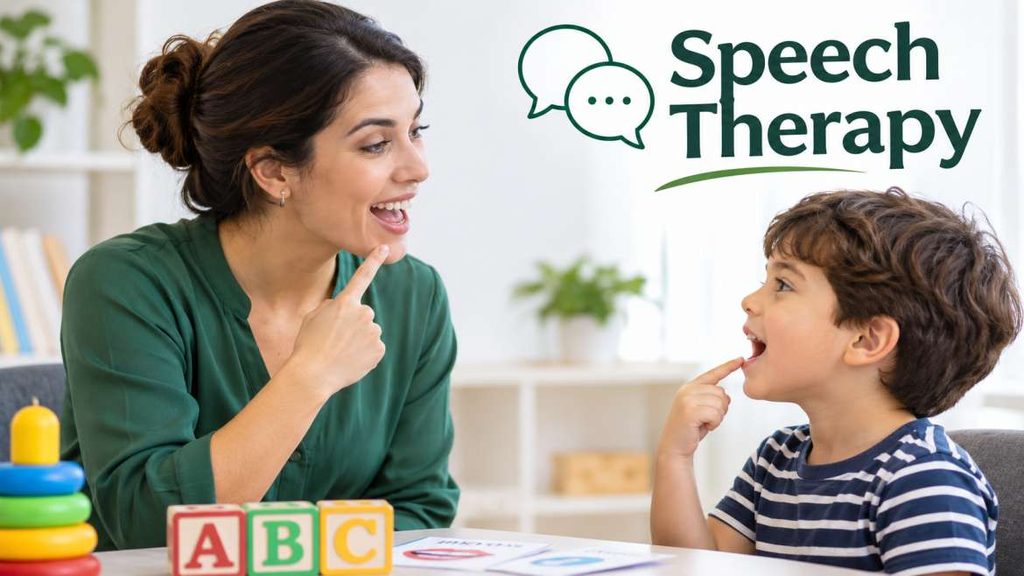
Pediatric speech therapy evaluates and supports children’s speech, language, and communication development. A licensed speech-language pathologist assesses how a child understands language, produces sounds, expresses ideas, and interacts with others.
Therapy may address several communication difficulties, including:
- Speech sound disorders: Difficulty producing certain sounds clearly.
- Expressive language delays: Challenges using words, sentences, or gestures to communicate.
- Receptive language difficulties: Trouble understanding spoken language or following directions.
- Motor speech disorders: Difficulty planning or coordinating the movements required for speech.
Families seeking pediatric speech therapy services in Denver may benefit from an evaluation that identifies their child’s strengths, developmental needs, and appropriate therapy goals.

How Does Pediatric Speech Therapy Support Communication Development?
Speech therapy addresses different aspects of communication based on each child’s abilities and developmental stage.
1. Improving Speech Clarity and Pronunciation
Some children have difficulty producing specific speech sounds, making their words harder for others to understand.
Speech-language pathologists use age-appropriate exercises, modeling, and repetition to support clearer sound production. Activities may involve practicing individual sounds, combining sounds into words, and using those words during natural conversations.
2. Strengthening Language Understanding and Expression
Communication involves both understanding what others say and expressing thoughts effectively. A speech therapist in Denver may assess vocabulary, sentence formation, listening comprehension, and the child’s ability to follow directions. Therapy activities can help children develop vocabulary, ask questions, describe experiences, and communicate their needs more effectively.
3. Encouraging Social Communication Skills
Children use communication skills to participate in group activities, develop relationships, and interact with family members. Speech therapy may support conversational turn-taking, asking for help, understanding social cues, and sharing interests. These skills are practiced through developmentally appropriate activities that reflect everyday interactions.
4. Supporting Functional Communication With AAC
Some children benefit from additional communication tools when spoken language alone does not meet their needs. Augmentative and alternative communication may include gestures, picture boards, communication books, or speech-generating devices. AAC gives children different ways to express themselves and does not prevent spoken language development. These supportive services can be tailored to each child’s individual communication needs.
Why Is Early Speech and Language Intervention Important?
Children develop communication abilities at different rates. However, persistent speech or language difficulties deserve attention, not the assumption that a child will automatically outgrow them. Access to specialized speech therapy for kids in Denver can help identify communication challenges early and provide individualized support based on each child’s developmental needs.
Early evaluation helps identify communication strengths, areas requiring support, and possible developmental concerns. Parents can seek guidance when their child:
- Has difficulty communicating basic needs.
- Uses fewer words than expected for their developmental stage.
- Struggles to combine words into sentences.
- Has speech that familiar listeners find difficult to understand.
- Experiences difficulty understanding age-appropriate instructions.
Not every communication difference requires ongoing therapy. A comprehensive assessment helps determine whether treatment, monitoring, or additional evaluation is appropriate.
The Role of Play-Based and Mobile Speech Therapy
Young children often learn through play, exploration, and meaningful interactions. Play-based speech therapy incorporates activities such as storytelling, pretend play, interactive books, and familiar toys to encourage communication.
Mobile therapy allows children to receive support in environments such as their homes, daycares, preschools, or community settings. Sound Bites Speech and Feeding Therapy emphasizes individualized, family-centered care that incorporates purposeful play, evidence-informed strategies, and caregiver collaboration.
How Caregiver Participation Supports Progress
Speech development continues beyond scheduled therapy sessions.
Parents and caregivers can reinforce communication skills through everyday activities, including:
- Reading picture books and discussing illustrations.
- Naming familiar objects during play.
- Encouraging communication during meals.
- Offering choices and allowing time for responses.
- Modeling clear language without pressuring children to repeat words.
Regular opportunities for meaningful interaction help children practice newly developing communication skills.
Understanding the Connection Between Speech and Feeding Development
Speech and feeding involve different functions, but both may require careful assessment of oral motor coordination and related developmental skills. Children experiencing chewing, swallowing, or food-texture difficulties may need a separate feeding evaluation. An experienced feeding therapist in Denver can assess feeding concerns, identify potential safety considerations, and recommend individualized strategies based on each child’s developmental needs.
Sound Bites Speech and Feeding Therapy offers pediatric feeding and swallowing services alongside speech-language and AAC support, with recommendations based on each child’s needs.
What Happens During a Pediatric Speech Evaluation?
A speech-language evaluation typically begins with a discussion of the child’s developmental history, communication abilities, and family concerns. A qualified pediatric speech pathologist in Denver can assess speech production, language comprehension, expressive communication, and interaction skills using clinical observations and appropriate assessment tools.
Following the evaluation, families receive recommendations based on the findings. A personalized therapy plan may establish goals related to speech clarity, vocabulary, functional communication, or other identified needs.
Frequently Asked Questions
At What Age Can a Child Begin Speech Therapy?
Speech-language support can begin during infancy or toddlerhood when developmental concerns arise. An evaluation helps determine whether intervention is appropriate for the child’s age, abilities, and communication needs.
How Long Does Pediatric Speech Therapy Take?
Therapy duration varies according to the child’s communication needs, treatment goals, developmental progress, and participation. There is no universal timeline for achieving specific speech-language milestones.
Can Speech Therapy Help Children Who Are Not Talking Yet?
Yes. Speech therapy can support early communication through gestures, play, language modeling, and, when appropriate, AAC. An evaluation helps identify potential reasons for delayed speech and suitable interventions.
Is Home-Based Speech Therapy Effective?
Home-based therapy can provide meaningful opportunities to practice communication in familiar environments. Its effectiveness depends on the child’s needs, the therapeutic approach, caregiver involvement, and individualized treatment goals.
What Is the Difference Between a Speech Delay and a Language Delay?
A speech delay generally involves difficulties developing speech sounds or producing spoken words. A language delay affects how a child understands or uses words and sentences. Some children experience both.
How Can Parents Find Suitable Pediatric Speech Therapy Services?
Families exploring pediatric speech therapy Denver options should consider the therapist’s qualifications, pediatric experience, assessment approach, treatment methods, and opportunities for caregiver participation.
Conclusion
Developing communication skills is an important part of childhood growth. When speech or language challenges arise, appropriate assessment and individualized intervention can help children communicate more effectively in everyday situations. From improving pronunciation to supporting language development and AAC use, pediatric speech therapy Denver services offer families guidance based on their child’s unique communication needs. Early conversations with a qualified speech-language pathologist can help parents make informed decisions and identify appropriate next steps.
Looking for individualized speech and language support in your area? Find Sound Bites Speech and Feeding Therapy on Google Maps to get speech therapy.